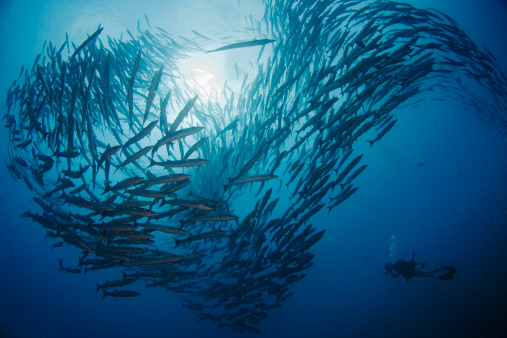
Barracuda Point, Sipadan, Malaysia
Barracuda Point has constantly remained in the top five diving spots in the world among divers for many years now. It is so named because of the many sightings of barracuda schools in their iconic tornado-like formation that makes this spot so popular with the international diving community. Your dive ends in a lovely coral garden, making for a perfect spot to snap some photos.
Beqa Lagoon, Fiji
Here is where you'll find clear, gentle waters and a wide variety of reef life, rendering this spot an easy but beautiful dive for both beginners and veterans. The conditions in Beqa Lagoon do vary, so take note of the time of the year you're intending to go for a dive. Barracuda in February, tuna in June and game fish in July or August.
Blue Corner, Palau, Micronesia
This is one of the most exciting dives in the world that promises up to 13 species of sharks and a performance of butterfly fish and the Napolean wrasse all around you. Instead of wasting energy and oxygen trying to keep afloat, using a reef hook here allows divers to relax and enjoy the sights, while minimising damage on the coral reef. Simply let the current flow over you while you watch one of the best marine shows in the world.
Galapagos Islands, Ecuador
Since this archipelago is protected by a marine reserve which means no commercial fishing, you can be assured one of the most fulfilling dives at the Galapagos Islands. The waters surrounding the islands thrive with marine life consisting of eagle rays, marine iguanas, Galapagos sharks, turtles and golden rays, just to name a few. To all avid divers, you've got to visit this spot at least once in your lifetime.
Great Barrier Reef, Queensland, Australia
The Great Barrier Reef has been made famous by the Pixar animation film Finding Nemo, so it should be a name familiar to all, whether you are a diver or not. It is also the world's largest and healthiest coral reef system and can even be seen from outer space. There is much to explore at this famous diving spot, so you won't get bored even if you return over and over again.
Great Blue Hole, Belize, USA
The Great Blue Hole in Belize is an almost perfect circular sinkhole surrounded by coral reefs that break the surface at low tides. The Great Blue Hole is 145m deep, making this almost a bottomless dive, and is the opening to unique marine formations such as stalactites and overhangs. There is little light and life in the deeper waters of this diving spot, but hang around the shallows and you'll spot anemones crowded with shrimps and fishes, along with the most beautiful corals dancing in the calm waters.
Liberty Wreck, Bali, Indonesia
USS Liberty was a US army cargo ship that got torpedoed by a Japanese submarine in 1942. The ship was initially steered onto Tulamben Beach, but lava flow from the nearby volcanic eruption of Mount Gunung Agung pushed the wreck back into the water where it now lies. It is covered with healthy corals and interesting marine colonies that frequent the wreck. Since it is so close to shore, many divers come here to enjoy an easy and rewarding dive to escape from the urban city life. Conveniently, Tulamben House Reef is located nearby for those who need a place to gain some diving skills before you dive into a bigger adventure.
Ras Mohammed National Park, The Red Sea, Egypt
Prophet Mohammed is believed to have visited the area in the 7th century, explaining the name of this famous diving location. The park is best known for its overhangs found 100m underwater, and the combining waters of differing salinity that allows for a diversity of fish to live in the same area. You'll see every species of fish in the Red Sea here, which is probably why Ras Mohammed is constantly on every diver's bucket list.
The Yongala, Queensland, Australia
The Yongala is Australia's most historic and intact shipwreck and is the only reef structure in the region. This means that it is teeming with marine life that gathers at this spot, with colourful corals and big fish covering and surrounding the wreck for a mighty display of nature that you're invited to watch. Make sure you time your dive well, since the conditions do vary and dives can be cancelled as long as the authorities don't deem it safe for any water activity.
Yap, Micronesia
Yap is a manta ray paradise. Over a hundred manta rays live in the waters here and can be spotted more commonly in winter when it's mating season. When you're here, don't forget to venture towards the Lionfish Wall to catch a glimpse of leaffish, scorpionfish and the beautiful lionfish in abundance.